Healthy Tools Are the Foundation of Every Investigation
Technology and infrastructure health is the foundation of the SOC. Investigations, threat hunts, and detection engineering all assume the same thing: the tools underneath are up, generating telemetry, and functioning as intended. When that assumption breaks, the rest of the SOC breaks with it.
The failures are rarely loud. A log source stops sending data. A connector drops. A parser silently degrades. Each one generates a health alert, and each one opens a blind spot in detection—coverage the team believes it has but no longer does. A ransomware rule that stops firing looks identical to a quiet environment. A threat hunt that returns zero results looks like good news—until someone learns the endpoint sensors feeding it went offline 7 days ago.
Meanwhile, every new tool adds operational drag. Engineers spend hours manually triaging health alerts—pivoting between consoles to answer basic questions about cause, urgency, and recovery—time that gets pulled directly out of real security work.
Meet the IT Engineer Teammate
GreyMatter's IT Engineer Teammate is a persona-based agentic system built into the platform, purpose-built to monitor, triage, and investigate the health of your security stack. It autonomously investigates every health alert, answers questions in chat, runs connection and credential tests, surfaces chronic issues, and learns your environment over time through Agentic Memory. It also adds firewall configuration analysis in chat and coordinates directly with the Detection Engineer, Threat Intel Analyst, and Threat Hunter.
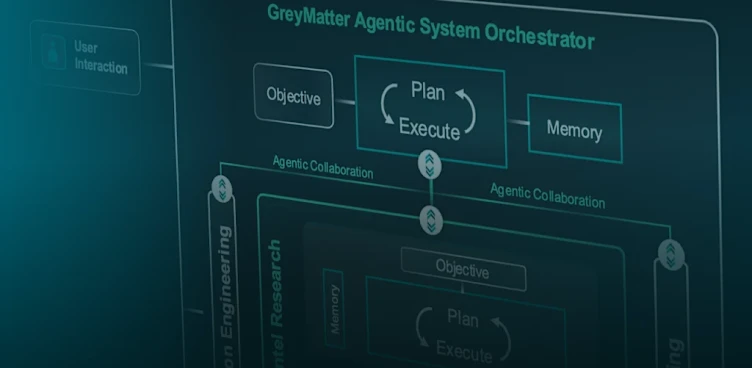
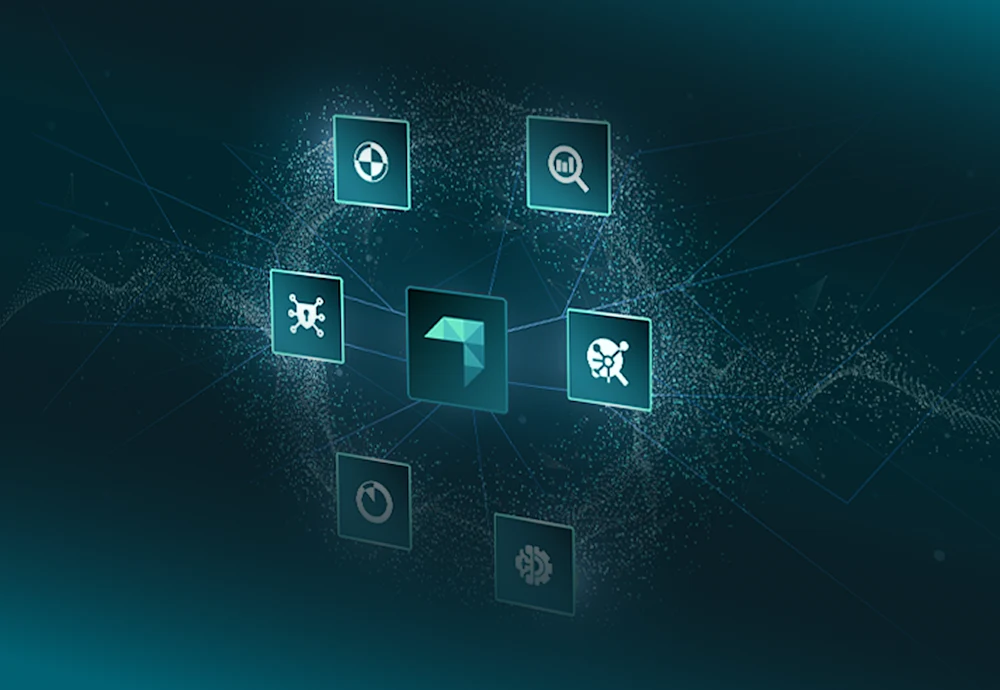
It is one teammate in the multi-agentic system GreyMatter orchestrates—alongside the IR Analyst, Threat Hunter, Threat Intel Analyst, Detection Engineer, and OT Engineer—each decomposed into hundreds of single-task agents so accuracy holds as work spans disciplines. Each system owns its discipline end-to-end but collaborate across disciplines without being asked, delivering agentic defense-in-depth.
Core Capabilities
Autonomous Investigation and Enrichment.
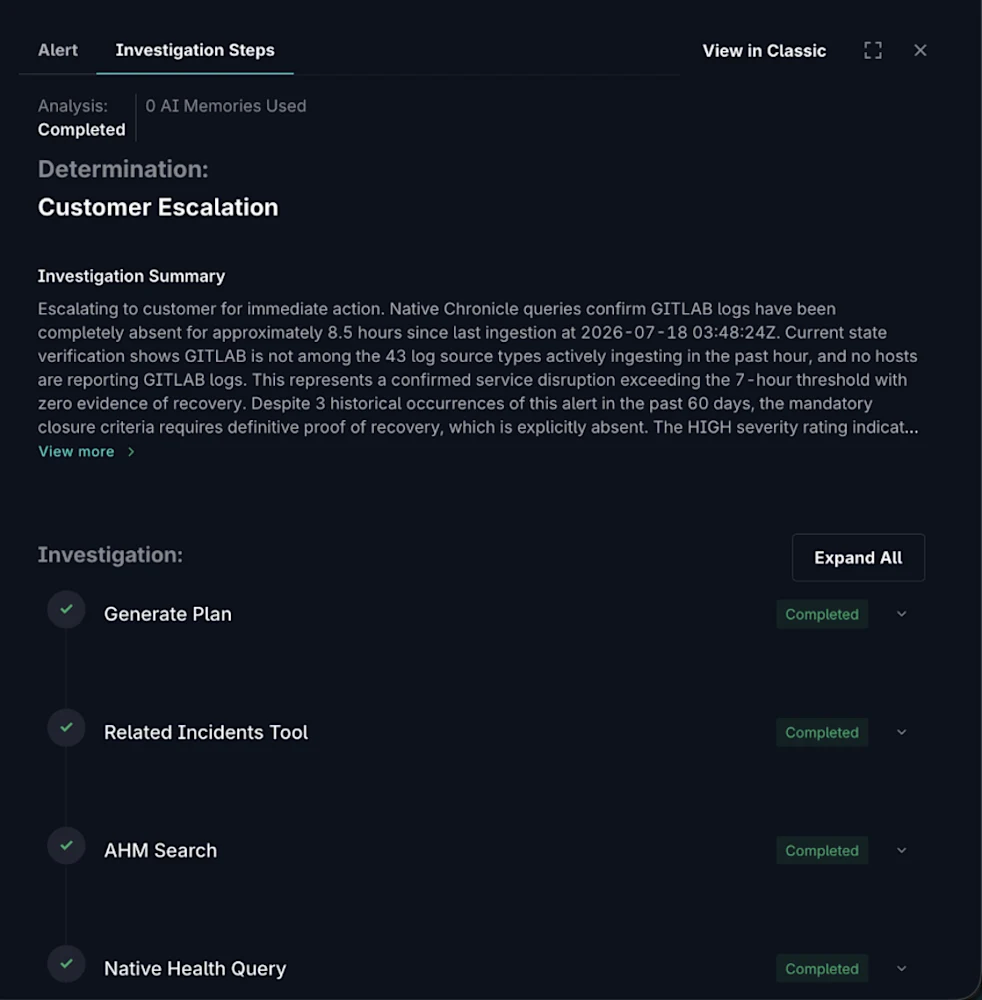
Every health alert is investigated end-to-end before it reaches you—historical baseline drawn from the past 8 weeks, real-time state from GreyMatter, cross-alert correlation, and severity assessment. The alert arrives with an answer attached, not a data point to chase.
Conversational Triage and Support.
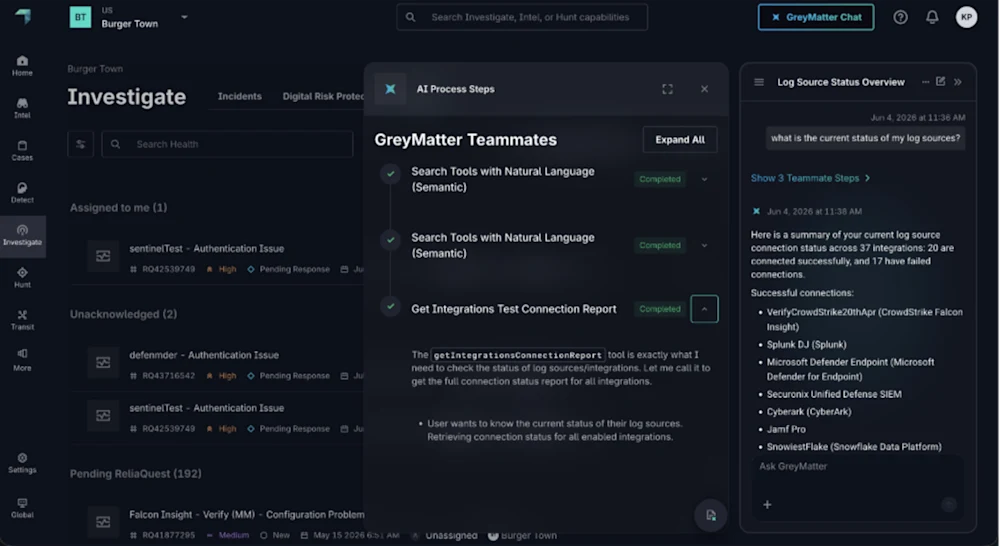
Ask follow-up questions in plain language without re-explaining context. Get step-by-step troubleshooting, field definitions, and integration setup guidance directly in chat.
Proactive Validation and Diagnostics.
On a failure, the Teammate executes connection tests against direct source connections and log sources, validates authentication, and returns tailored remediation guidance.
Predictive Monitoring and Pattern Recognition.
Instead of surfacing 20 identical alerts across weeks, the Teammate distinguishes one-off failures from systemic problems and flags degradation trajectories—"EDR sensor failures recurring on the same host group"—so the team can act at the root.
Agentic Memory.
The Teammate learns maintenance windows, baseline log volumes, and escalation preferences, then applies them automatically. Tell it "expected during Sunday 2 AM maintenance—don't alert," and it recognizes future Sunday failures as expected, confirms connections restore afterward, and only alerts if something fails outside the window.
Firewall Configuration Support.
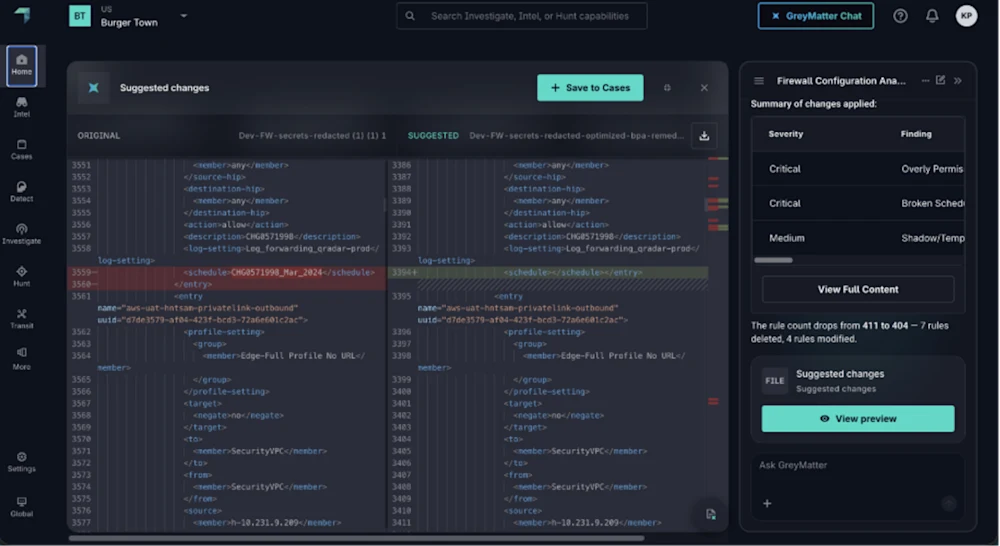
Upload a configuration in chat and receive prioritized, line-referenced recommendations, a complete updated configuration file, and—on request—a side-by-side comparison explaining the security and performance impact of each change.
How It Works
The IT Engineer Teammate builds on the connections GreyMatter already has to the technologies in your stack. There is no separate install. It leverages those existing API connections to the sources it monitors, watching their health and triaging the alerts they generate—the same way the IR Analyst Teammate triages a security detection.
When a health alert fires, the Teammate investigates and enriches it autonomously, then shows its work. Agentic Steps Transparency exposes every step on the alert—which tools ran, what was queried, and why the Teammate reached its conclusion.
Health also stops being a separate silo. As one of the teammates in GreyMatter's multi-agentic system, the IT Engineer Teammate collaborates with the Detection Engineer, Threat Intel Analyst, and Threat Hunter across disciplines without being asked—so an infrastructure problem surfaces as a coverage problem the moment it matters.
Ask in Plain Language, Get an Answer Grounded in Your Environment
You can also work with the Teammate directly in natural language—no dashboards, no query syntax. Ask the IT Engineer Teammate:
"What caused this connector failure and how do I fix it?" The IT Engineer identifies the root cause, runs a connection and credential test against the source, and returns step-by-step remediation guidance you can execute immediately.
"Is this log source outage urgent?" The IT Engineer scores severity against the source's expected volume and the detection coverage that depends on it, so urgency reflects operational impact rather than alert volume.
"Has this alert fired before, and how often?" The IT Engineer pulls the historical baseline from the past 8 weeks and reports recurrence, frequency, and whether the pattern is trending toward failure.
"Show me chronic issues that need strategic attention." The IT Engineer surfaces recurring problems and degradation trajectories that warrant infrastructure-level action instead of another one-off ticket.
"How is this SIEM parsing failure impacting my detection coverage?" The IT Engineer coordinates with the Detection Engineer to map the failure to the specific rules and coverage at risk.
"Review this firewall configuration and recommend improvements." It returns prioritized, line-referenced changes and a complete updated config, with a side-by-side impact comparison on request.
Answers that once took 30 minutes of console-hopping arrive in about 2 minutes, grounded in your environment.
Use Cases
Collapsing Chronic Noise Into One Root Cause.
An EDR sensor fails on the same host group every few days. Handled as isolated alerts, it produces 20 near-identical tickets across a month and never gets prioritized. The IT Engineer Teammate recognizes the pattern, collapses the noise into a single finding—"EDR sensor failures recurring on the same host group, recommend infrastructure capacity review"—and points the team at the cause instead of the symptom.
Closing a Silent Detection Gap.
A ransomware detection rule stops firing. On its own, that looks identical to a quiet environment. The Detection Engineer Teammate asks the IT Engineer Teammate whether a data problem is behind it. The IT Engineer traces a configuration error that broke processing 36 hours earlier, monitors restoration, and notifies the Detection Engineer to replay the affected detections. The customer receives one clear notification and closed coverage rather than a silent gap.
Hardening a Firewall Configuration on Demand.
A network engineer uploads a firewall configuration directly into chat. The IT Engineer Teammate returns prioritized, line-referenced recommendations, a ready-to-paste updated configuration, and a side-by-side comparison that explains the security and performance impact of each change. Config review moves from a periodic manual chore to an on-demand check.
Availability
GreyMatter Health is delivered to all GreyMatter customers automatically, with no customer action required—core visibility and triage of health alerts. The IT Engineer Teammate and cross-Teammate coordination is live with an active Teammates package.