
As enterprises adopt AI agents, Model Context Protocol, or MCP, is emerging as a new security layer.
MCP gives AI agents a standardized way to connect to enterprise tools, applications, and data. Through MCP, agents can search a knowledge base, interact with GitHub, query a database, access cloud infrastructure, or execute an action inside another application.
This connectivity is what makes agentic AI powerful. It also raises the security concern around MCP.
A growing number of security tools are being built to help organizations discover MCP servers, enforce policy, limit agent access, inspect agent-to-tool interactions, and block dangerous activity. These capabilities are necessary because organizations need to understand where MCP is being used, which tools agents can invoke, and what permissions those tools carry.
But an attack that begins through MCP may not end there, creating a larger security problem that cannot be solved by protecting MCP alone.
The Attack Can Move Beyond MCP Quickly
AI agents introduce new behaviors into the enterprise. While many security teams are already familiar with the consequences of compromise—like stolen credentials, lateral movement, and data exfiltration—there’s a change in how the attacker gets there.
Instead of an employee clicking a malicious attachment or an attacker exploiting a vulnerable application, the entry point may be a manipulated AI agent invoking a tool through MCP.
For example, if an AI agent with access to internal documentation, GitHub, and cloud infrastructure processes a document containing an embedded malicious instruction, it can be manipulated into abusing a legitimate MCP tool. Once the tool accesses a credential, that credential can be used to authenticate into a cloud environment, create unauthorized workloads, access sensitive information, compromise identities, and exfiltrate data.
Even though the initial activity may have been an MCP security problem, everything that followed was an enterprise attack. Security teams need to see MCP activity as part of the broader attack story, not just an isolated security domain.
Protecting the Interaction Is Necessary
The security industry is focused on protecting the connection between AI agents and the tools they use. MCP discovery, policy enforcement, least privilege, and runtime inspection are becoming key components of an AI security architecture.
MCP firewalls are emerging to provide visibility and policy enforcement around MCP servers and tools. Security researchers have also documented MCP-specific risks including prompt injection, tool poisoning, secret exposure, and excessive authorization.
Organizations need these controls around MCP to reduce the likelihood that agents can be manipulated or misuse the access they have been given. But security teams also need to understand what happens when that prevention fails, when an approved tool is abused, or when an interaction looks legitimate until its impact begins appearing elsewhere in the environment.
Security architecture has never been built on the assumption that every preventive control will work every time. AI should be no different.
Why Detection and Response Still Matter
Once malicious activity crosses from the AI layer into enterprise infrastructure, the SOC needs visibility beyond the MCP interaction itself.
An analyst investigating suspicious agent behavior needs to know whether the same identity authenticated somewhere unusual, whether a cloud permission changed, whether a new process ran on an endpoint, whether an unusual network communication followed, or whether sensitive data was accessed.
Looking at MCP activity alone tells you that something suspicious happened, but looking across the enterprise tells you whether it became an attack.
The challenge facing security teams is rarely a lack of alerts. It is understanding which activity matters, how separate signals relate to one another, and what action should be taken before an attacker creates greater impact.
AI agents will add another source of telemetry and another set of behaviors for analysts to interpret. They should not create another security silo.
How GreyMatter Gives the SOC the Whole Attack Story
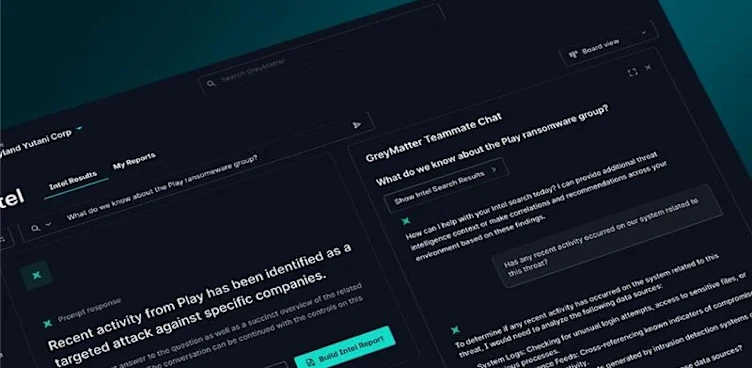
Imagine an MCP security product generates an alert that an AI agent invoked an unusual tool. That alert matters, but by itself, it is not enough to tell the SOC whether an attack is underway.
GreyMatter can correlate that activity with additional signals across the environment, showing that the same identity accessed a credential it had never requested, authenticated to a new cloud resource minutes later, and began accessing sensitive information.
The first signal tells the analyst something unusual happened. The second shows how that activity became part of a larger attack. As agentic AI becomes another part of the enterprise environment, security teams need to understand activity across humans, machines, applications, identities, cloud workloads, and agents at the same time.
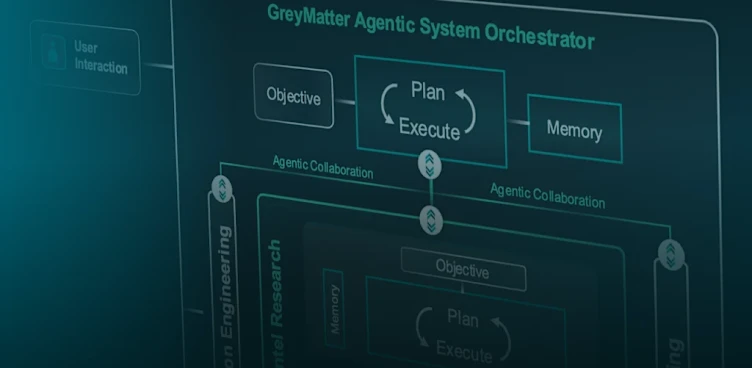
GreyMatter brings security telemetry and response together across the enterprise, helping security teams detect, investigate, contain, and respond to malicious activity across multiple technologies and data sources. It connects AI activity to the broader context of an investigation, so analysts are not forced to treat AI activity as another isolated security silo.
GreyMatter helps security teams detect when suspicious behavior becomes part of a larger attack, understand the scope of that activity, and respond before the attacker can move further.
AI Agents Need More Than Guardrails
AI agents introduce another actor into security operations, which have focused heavily on activity generated by humans, applications, and machines.
They can operate on behalf of users, interact with multiple systems, and make decisions about which tools to invoke and which actions to take, making it necessary to understand agent activity in the context of the full environment.
From an attacker’s perspective, those are simply different components of the same attack chain. Security teams need to see them the same way.
The security controls developing around MCP are important. But prevention has never been perfect, and organizations should not expect it to suddenly become perfect for AI agents.
The future of AI security will require organizations to protect the interaction between an agent and the tools it uses while also maintaining visibility into what that activity causes across the enterprise.
MCP creates a new pathway into the enterprise security teams already have to defend, not a separate security universe. Securing that pathway matters, which is why AI agents need more than guardrails. They need detection and response.