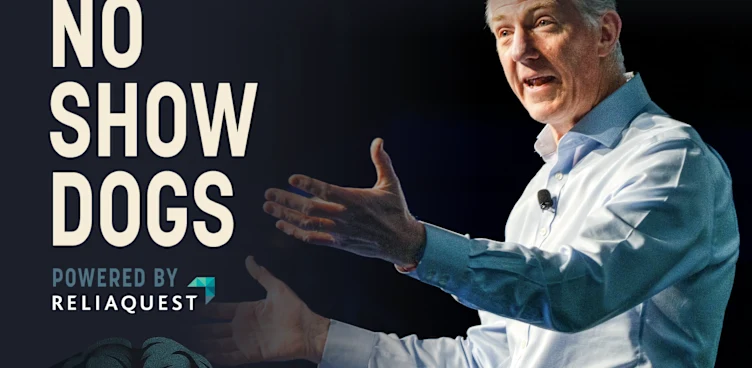
Consistency is a Hallmark of Greatness with Kirk Ferentz
University of Iowa Football, Head Coach, ReliaQuest Bowl 2025

About This Episode
At the ReliaQuest Bowl Contract Signing Party, University of Iowa head coach Kirk Ferentz shares timeless lessons on leadership, consistency, and adaptability. He emphasizes the importance of focusing on fundamentals, fostering resilience, and taking challenges one day at a time.
You'll also hear coach Ferentz discuss:
- Balancing hard work and change
- Embracing change
- Developing talent
Watch The Episode
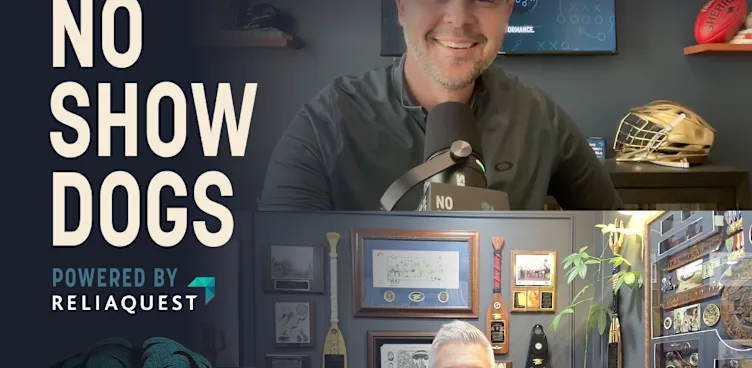
ReliaQuest mental performance coach Darren McMains interviews top performers across multiple industries to unpack their mindset and their strategies that has helped them dominate in their arena so you can dominate in yours. Welcome to No Show Dogs powered by ReliaQuest. Hey. Welcome back to the No Show Dogs podcast powered by ReliaQuest. We are at the ReliaQuest bowl contract signing party here at Raymond James Stadium right here in Tampa, Florida, and we're joined by the University of Iowa head football coach Kirk Forint. Coach, welcome to No Show Dogs. Welcome to the ReliaQuest Bowl. Well, it's great to be here. Really excited to be back. Oh, man. We are we are fired up for this one. Well, let's just jump into it. Iowa is one of four programs in the country to win at least eight games in every full season since twenty fifteen. The other three being Alabama, Georgia, and Ohio State. Now one thing we say here all the time is one of the true hallmarks of greatness is consistency. And I'm just curious, like, how have you been able to maintain such consistency in just this ever changing world of college football? Yeah. Two two things. We actually fifteen is kind of the landmark year for us, and it was coming off a season that was maybe less than satisfying as any I've had in my twenty seven years. Not just me, but I think just our program. We won seven games in fourteen, but it it never felt good. And I can think of a couple games. One in particular, we had to do a two minute drill right at the end of the game. I think it was week three or whatever against the team with all due respect that wasn't that good. And, I mean, we're lucky to win the game quite frankly. And that was kind of emblematic of the season. And then at the end of the year, we played our last game against the team where both teams looked like they're just trying to lose, basically. And we we were successful. We ended up wanting more than them. Apparently, we just ended on a real bad note. So at the end of that season, we we, just took some time as a staff and threw everything up against the wall and just, you know, let's go back and and look at everything like we're a new staff, and that's kinda what we did. So, readjusted a few things, went to morning practices, couple other things that maybe are a little bit unique or novel. But long story short is, you know, we we did go through a revamp period, and I was probably about the middle of my tenure, you wanna use that word. And, so it hasn't just been a smooth ride all the way through. Sure. It never is in sports. And I think then to that point, you know, once once you kinda understand what you're trying to do, it's it's really no more simple or hard, complex, and taking it a day at a time. You gotta have a plan, obviously. But it's a it's a year at a time. It's a day at a time, week at a time, however you wanna break it down, but not getting too far ahead of yourself is really critical. That's great. How how do you keep the players locked in on that that same mindset, that same messaging? Yeah. That's a big part of my job, because I don't do much else. I mean, it's quite frankly, head coaches. Everybody says, you gotta be so busy. Like, you know, I don't know what I'm doing. So but that that's part just, you know, the big part of that, I think, is trying to anticipate or or think about what they may be hearing. And that's pretty easy to predict. Now I'll go on social media, but I I tend to understand, like, you know, it's like any article. Like, know, if we're doing well, it's positive. If we're not doing so well, it's not so positive. And so just trying to be proactive. And, you know, there's a lot of things that our players have to deal with now. Maybe they didn't have to deal with twenty years ago. Trying to be proactive there and just, you know, getting ahead of that and trying to, you know, show the show them there's two sides to everything. It's good. I'm curious. What did you learn as a head coach at the at the University of Maine that made you a better head coach when you took over at Iowa in nineteen ninety nine? Yeah. A million things. I mean, it's just one of the blessings of that. I made a million mistakes that nobody even noticed, quite frankly. I I don't think, it wasn't, you know, it wasn't in the big ten. It wasn't quite a high visibility sport at Maine. Hockey was a much Sure. Much more successful sport. And I think probably two things I would take away is just I can give you two examples, you know, the the value of hiring people that really are gonna fit in your program. And every program is different. Every locale is different. Mains are really you know, I mean, it's almost out of the country where where the campus is. So it it takes a certain kind of person to thrive there, I think. And, you know, I I maybe made some assumptions from what I'd seen at Iowa during my nine years nine years as an assistant. So I missed the boat there a little bit, but it taught me some really good lessons about, you know, maybe being more thorough when you hire people to make sure you're gonna have a long term relationship with the people you hire. And then the other thing I I remember a vivid memory. I had one of my my mentors worked for Lou Holtz at Notre Dame, and Lou Holtz had a manual for everything. Right? So he had one about the coaches and office protocol and all that. And I I just took such pride in, like, you know, basically copying it and, you know, making my own manual, and I gave them to everybody. And what I learned was what a waste of time manuals are. Like, you know, what's important is having conversations with people and and talking to them, not, you know, not giving my manual and ask them to sign at the bottom like that. That's, you know, that was stupid on my part. A waste of time and, you know, not very productive. That's really helpful. I I didn't expect you to say that. That was really stupid. I was curious where you're going. That's how said, alright. Yeah. That was That's good. So you It's good manual, though. Mean, nobody read it, apparently. So you came in and you you replaced a legend, Hayden Fry. And I'm just curious right away, like, how do you manage those? I'm sure huge expectations. Maybe you felt some pressure. Like, as a new leader, head coach, how how'd you manage that? Yes and no. Couple couple of things I benefit from. One was I had worked for for coach Fry for nine years. He gave me my break in college football. He already met I was hired in nineteen eighty one. I was a twenty five year old grad assistant at Pitt. This could never and would never happen again in today's world. But there's some way that, you know, things resonated. And, next thing you know, I got a job, and it was in June. And I had no idea, like, what I was walking into. I would had nineteen straight losing seasons. I knew nothing about coach Fry. Nothing about the program. And, the next nine years are just magical years, but it's because of him. So but at least I had the the good fortune of working for him, so I understood the program. And certainly, a lot of the things I believe are important in college football, I've got from him. Like, that's he was the guy that was, my, my mentor, if you will. And then the other part is that we we couldn't be more different personality wise, coach Ryan and I. So there was no, you know, no sense trying to copy him and my mentor, Joe Moore, the guy that worked at Notre Dame and was my high school coach. Same thing, a very different personality. So I never tried to imitate Joe and my coach. You know, I tried to learn from him and carry the good things, but you have to do things in your own personality. And coach Fry is a very engaging, charismatic, funny I mean, everything I'm not, that's what he is. So, you know, the bottom line was I just I was respectful to the past and and respectful of the things he taught me. But then you gotta you gotta move forward and do things the way you think are best within the framework of who you are. No show dogs is brought to you by ReliaQuest, the global leader in AI cybersecurity. ReliaQuest helps enterprise cybersecurity teams contain threats in minutes with its Agentic AI security operations platform, GreyMatter. ReliaQuest makes security possible for the most trusted enterprise brands in the world. Learn more at ReliaQuest dot com. You're the all time winningest coach in Big Ten history. Two hundred and twelve wins and counting. I'm curious. Does one win stand out above all the rest that like, when you think back of all those, like, which one that really sticks out? Yeah. So I'm a coach, so it's always a sick answer. Like, yeah, I think about a couple of losses that I'll I'll carry in my grave, you know, unfortunately. And, there are three in my career right now, one at Maine and, and two at Iowa. And the good news, I guess, both of them are you know, it's over a decade ago, but they're ones I just like, you know, what was I thinking? It just wasn't the right thing to do strategically. And, in retrospect, like, you know, just wish I could do it. I'll never confess to them at least until I'm done coaching. But, those are the ones that stick with you. But if I if I had to pick one win and we've had a lot of great ones, I mean, it's hard. But one of the best ones, quite frankly, was our first bowl win in the Alamo Bowl in two thousand one to go seven and five. And, you know but it's a world of difference, you know, and that that point, we were trying to gain traction. So it was like the first positive step. We got to a bowl game, and we won the bowl game against, Texas Tech. Cliff Kingsbury was the quarterback. Walker was the receiver. And Mike Latroe, I just think is a tremendous football coach, one of the best of my generation. I was a head coach. So it was just a really significant meaningful moment for our team, and no national pundits were writing about it or covering it, but it was a really big moment. You know, one thing you're renowned for is player development, like your ability to teach. So I'm curious what makes a coach a master teacher? Yeah. First of all, we are we are player development. I started taking that that term long ago, and it's kinda become a catchy phrase for a lot of people. But, I said that twenty some years ago when I came here. And I think that, again, the value of me being an assistant, you know, I I did notice real quickly that, like, our guys don't all look like Ohio State's guys. You know? And, you know, we played with a six foot center. Mark Sandler was the three year starter for us on really good teams, and he was a six foot. He might have been six and a half. You know, I don't know like him. But our our guys, you know, we had a different standard. Bob Sanders, we got going here twenty seven years ago, really probably changed the chemistry and the tempo of our program, in two thousand. He's five foot eight when he got there, and he's five foot eight when he played for, Indianapolis Colts and played Super Bowl, down here in, in Florida. So, you know, we don't have those height bars and all that kind of stuff. And then it's just it's all about the work you do and and, you know, giving a player a chance to grow and and develop to his fullest. And if you get the right guys that don't mind working hard and, you know, have are goal oriented, then you got a chance to be successful. That's really good. I love that, coach. I know I know we're getting towards the end of it. And we do one little section here that we call three and out. What's been the most impactful coaching advice that you've ever received? Probably from my mentor, Joe Moore. And, he had a saying about he he would say that, you know, schemes are important. Fundamentals are way more important. And, everybody talks about fundamentals. I'm not sure everybody believes in fundamentals. And my experience is at the end of the season, you know, this play, that play, we should have done this, should have done that. But more often than not, it's a turnover with bad ball security or missed tackles or, you know, just poor technique and blocking, things like that. That that's really where you wanna lose, and I've I've always believed that. And so, you know, it's one thing to believe it, then you you've really gotta try to instill that in your team and and make sure they understand it is important. Sure. What what's a daily habit that has allowed you to be so consistent as a head coach for so long? Yeah. I mean, I I don't know about daily, but I I think the biggest challenge for me and it it it's I'm not the only person that goes through this. But if you're a busy person, you know, just having a plan for how you're gonna manage your time and your energy because you only have so much. I'm seventy now. Right? So I guess it's gonna start, you know, sinking down a little bit, but I think you really gotta be mindful about how you wanna invest your your your time and energy. And, I talk to our players about that all the time. And that being said, like, there's a time to work. And one thing coach in the NFL taught me, there's a time to work, but there's also a time to rest and recovery. And that's really important if you wanna be able to go long term. You know? If you just if you're just in it for a sprint, don't worry about it. But if you wanna sustain and be, you know, good over time, you better you better know when to go hard and when to pull back. That's good. And then what would you say is the the biggest mindset shift a player has to make to go from good high school player to great college player? Yeah. I think the one thing to keep in mind, typically, everybody in high school that comes to a college program like ours, even though we'll take six foot centers or five foot ACF safeties, you know, they were probably really good in high school. So just realizing that you are taking another step and our our older guys go through the same thing if they go to the NFL and realizing there's always first, it all starts with what know, are you improvement driven? Are you really focused on? Is that important to you? Then you've got to be able to, you know, take a plan and then invest in that plan. And then obviously, you know, the work work is really important, but the resilience, because if you're doing something hard like playing big ten football, you're gonna get knocked down. It's just part of the game. I think if you're doing anything challenging in any area of life, you're gonna get knocked down. And it's an opportunity to learn. You know, it's, if you look at it the right way and realize that, you know, unless you quit, you never fail. So, you know, just trying to get get players to understand that. And most of them do, but it's just, again, you're you're taking a step up. It's a little bit more competitive with the fat, a little faster, and patience is okay. It's good to be impatient, but patience, is part of the deal too. That's good. And final question here, we ask every guest on the No Show Dogs podcast, same question. And it's based around this idea of being a hunting dog versus being a show dog. Like, it's about doing the work. Right? It's not about looking good. It's about being good. And so when you reflect on your career up to this point, what do you think have been some of the things that you've been willing to do that maybe others haven't that has helped you have such a great career? Yeah. I don't know how to compare myself to others, but, like, my background is I'm a line coach, offensive line coach, and Joe Moore trained me to do that in nineteen eighty, University of Pittsburgh. And it was the greatest, you know, coaching year. I mean, I had more fun doing that than ever. So I've I've, like, never really wanted to be aspired to be a head coach, ironically. Never aspired to it, and I just like coaching. I just I enjoy the the interactions with people and trying to, you know, get a guy from here to there, get him to, you know, see his potential and maybe improve a little bit. So, I mean, full disclosure, I I'll retire in a heartbeat if I can find somebody I wanna work for. My dream is to be a line coach again for the last five years, and I you know, I'm a little peculiar about who I work with, I guess. I don't know. So I don't if that's gonna be a reality, but, that's what I enjoy doing is work with the players and and having the intimacy. That's the hardest thing about being a head coach. When you're a line coach, you're you're in there with, like, you know, fifteen, sixteen guys. And Sure. When you're a head in the NFL, it was ten guys. So in the, you know, in college, you got you know, you're a head coach. You're talking you're trying to make those those connections with people. It's a little bit more of a challenge, but, that that's that's really what I enjoy. And the thing I think if you're if you're a coach, you better enjoy that part of it. Absolutely. Well, coach, all the best to you and the team and the ReliaQuest bowl. You know, we're looking forward to watching you guys noon Eastern, New Year's Eve right here in Tampa at Raymond James Stadium. And, just thank you so much for your time today. Really appreciate it. Thank you. Absolutely. It's a great venue, and that's that's one thing that hasn't changed. And the other thing that hasn't changed, you gotta grow a good opponent. Yeah. We're underdogs again, so here we go. We'll go to work. Alright, coach. Thank you. My pleasure. Yeah.
ReliaQuest exists to Make Security Possible, allowing security teams to detect and contain threats within minutes — anytime, anywhere. Our AI powered GreyMatter technology connects with customers’ existing tools and infrastructure to drive greater visibility and automation without the need to centralize data or standardize technology. Built on over a decade of experience, ReliaQuest is the only cybersecurity technology company at scale, at the enterprise, that makes the customer the platform. With over 1,000 customers worldwide and 1,200 teammates across six global operating centers, ReliaQuest delivers security outcomes for the most trusted enterprise brands in the world.
Connect with No Show Dogs on LinkedIn: https://www.linkedin.com/company/no-show-dogs
Connect with No Show Dogs on Instagram: https://www.instagram.com/noshowdogs
Learn more about the ReliaQuest Bowl: https://www.reliaquestbowl.com/
Additional Content
Learn How GreyMatter Agentic AI Scales Your Security Operations
GreyMatter is an agentic AI security operations platform with 6 agentic Teammates that use hundreds of agent skills and AI tools to work toward an objective, not just tasks.
