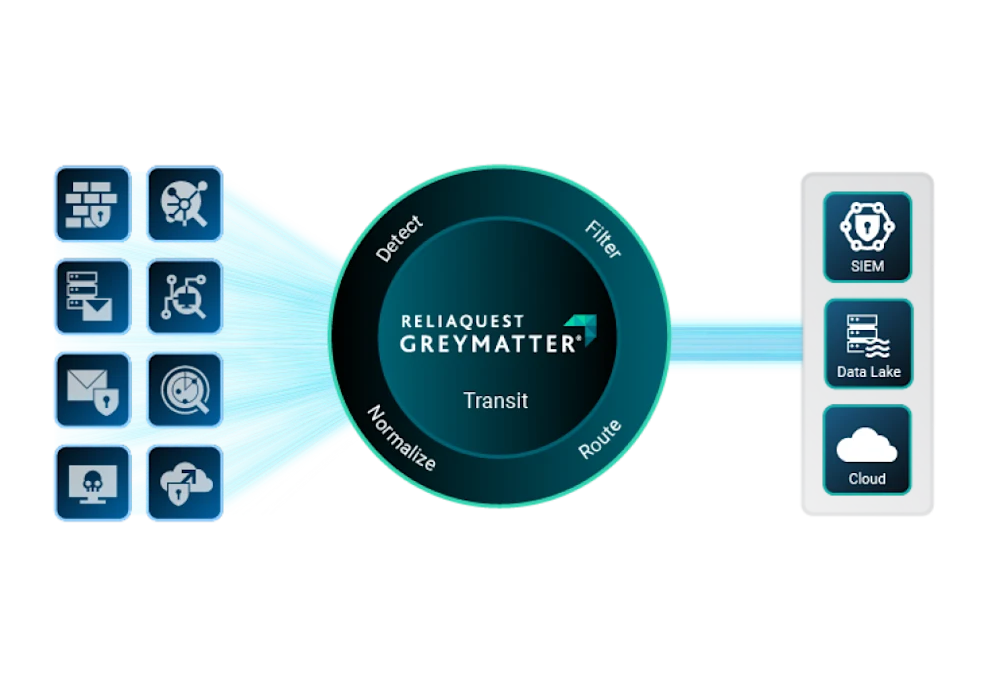
Security teams face an escalating challenge: cloud, endpoint, network, and SaaS sources generate massive volumes of telemetry—often terabytes daily. Traditional SIEM and storage-first approaches force an impossible choice: invest heavily in ingestion and licensing to maintain visibility, or filter aggressively and risk missing threats. By the time your SIEM has indexed the data, correlated the signals, and surfaced an alert, the threat actor is already deep in your environment.
Some teams try to solve this by deploying multiple SIEMs, but wind up with fragmented workloads, multiplied operational overhead, and multiple sources of truth instead of one.
The SOC Shift Toward Decentralized Detection
More security leaders are recognizing this architectural flaw. They're moving away from the "SIEM-first" philosophy toward decentralized detection—running detection, containment, investigation, and response at the point that matters most: at the source, at storage, or in transit.
This doesn't mean your SIEM becomes irrelevant. It means your SIEM becomes one tool in a distributed detection strategy, just not the only one.
By distributing detection across your architecture, you gain:
Faster detection: Threats are caught at the source, not after storage and indexing delays.
Architectural flexibility: Detection happens where it makes the most operational sense for your environment.
Lower costs: Instead of ingesting and storing everything in a single SIEM just to run detections, you can route data where it makes the most sense.
This is the re-architecture security teams need. And it starts with rethinking where detection happens.
GreyMatter Transit: 5-Second MTTD
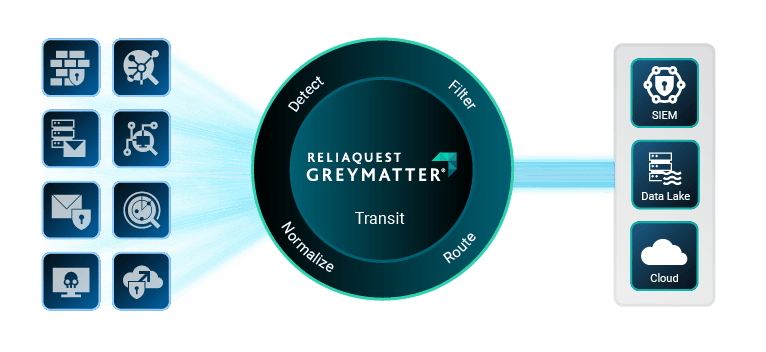
GreyMatter Transit is the data pipeline capability that detects threats as data is in transit, before it reaches storage or its final destination. By detecting threats across your existing security tools while data is in motion, Transit decouples detection from ingestion. You gain the ability to respond faster, spend less, and maintain comprehensive visibility without compromise.
"Faster response, lower ingest costs, and more control over where our data lives—all from one architectural shift," said Pat O'Keefe, Head of Global Cybersecurity at Circle K and early adopter of GreyMatter Transit. "Five-second detection was the moment it clicked. "
Key Features at a Glance
Native Pipeline Configuration
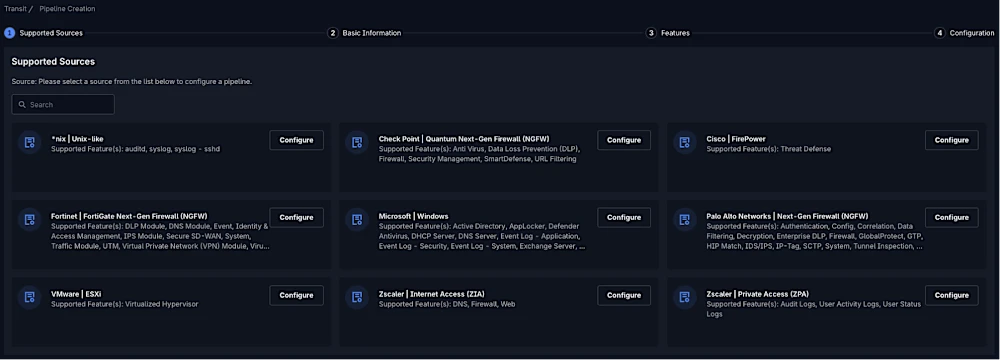
Build and manage pipelines directly within GreyMatter, for complete control of security telemetry. Simplify deployment with full visibility into existing and new sources, without the need to send all data to the SIEM and overspend on storage costs.
Detection in Transit
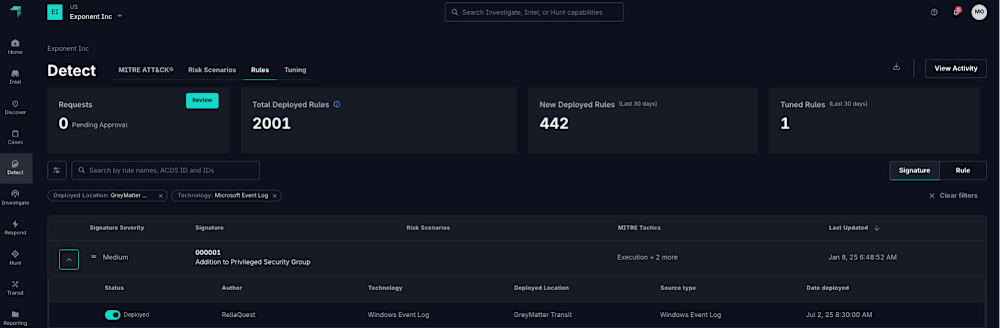
GreyMatter Transit reviews normalized data in motion to detect malicious activity in near-real time, with a mean time to detect (MTTD) of 5 seconds, giving you the speed to respond to threats before escalating and reducing business impact risk.
Intelligent Filtering and Flexible Routing
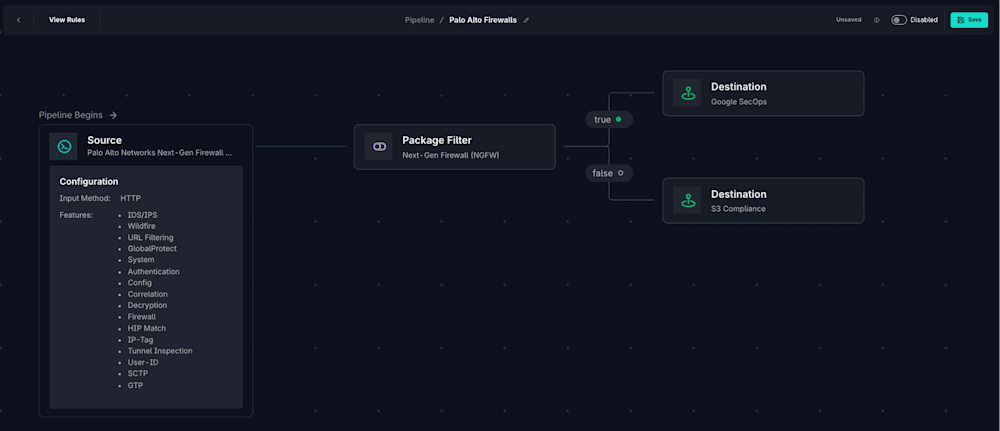
Pre-built pipeline packages strip irrelevant events and clutter before storage, while flexible routing lets you send optimized data to a SIEM or cost-effective storage, balancing speed, cost, and visibility.
Real-World Use Case: Fortune 500 Manufacturing Company
Graphic Packaging International, a Fortune 500 manufacturing company, deployed GreyMatter Transit to build two critical data pipelines and immediately saw the benefits of decentralized detection.
Using Transit to filter Windows events, they reduced Windows event logging to their SIEM by 30%. In a parallel pipeline, they filtered 54% of DNS, Web, and Firewall events—intelligently routing only relevant data to their SIEM.
Across both pipelines, they achieved sub-5-second detection while cutting ingestion costs.
Why GreyMatter Transit Stands Apart
Detect in Motion
Unlike other data pipeline tools, GreyMatter Transit detects threats in real time and automatically launches agentic AI workflows, investigations, and response playbooks within minutes.
Integrated, Not Standalone
Transit isn’t a third-party tool stapled together with a SIEM or data lake. It’s a native feature of GreyMatter, simplifying deployment and reducing complexity compared to standalone data pipeline solutions.
Universal Translator
Transit leverages GreyMatter’s Universal Translator to normalize raw payloads into the OCSF framework, making data easier to read, filter, and act on.
What to Know About the Release
GreyMatter Transit is available starting December 15, 2025, with ongoing updates to support new technologies and destinations.
"GreyMatter Transit continues to improve our architecture. We cut mean time to detect to 5 seconds and significantly reduced ingestion costs without sacrificing visibility."
- Pat O’Keefe, Head of Global Cybersecurity at Circle K